
There’s this assumption that I’ve picked up over the years that the general public expects a writer to carry a certain lexicon…an intense vocabulary…sometimes, even a pretentious one – the kind that signals a writer is somehow above the reader. I find it a bit funny because yes, to some extent, a writer is more equipped to articulate emotion and sentiment than someone who isn’t writing for a living. But at the end of the day, writers write for the reader. So why must there be a performance of intellect?
I don’t think this comes from pure arrogance, even if it might sound that way. Most times, the process is more innocent than that – a writer thinks, ‘this topic calls for a certain register that I must meet through showing the reader how informed I am.’ It’s often a genuinely good instinct. However, it can also come from wanting to signal to other writers and industry peers that you’re more linguistically capable “in comparison.”
Good intentions or not, the result is the same. When the vocabulary doesn’t match what the topic and audience need, you create a distance with your readers. And readers can feel this distance whether or not they can name it anything beyond “meh” or “off-putting.”
So whenever I approach a topic, I ask myself: who is my audience? Is there a new audience I am wanting to invite as well? I might personally reach for certain words to describe something, but are they appropriate or necessary for this piece, my audience, and the publication’s tone?
🐌 The (Long) Slug 🐌
Think of words the way you’d think about food and nutrition. When you understand language as something limited (beginner or not), you may moralise words and sort them into “good” or “bad” categories as some people do with food. You’d think 1-2-3 words are silly, dumb, beneath me. But 4-5-6 are smart, intellectual, and worth using. But instead of that scale, it’s best to ask, “does this word fit the context?”
For example, Gen Z slang can feel silly on paper, but what if the piece needs it? Can I use it casually with some wordplay? If I can’t do that and I’m not fluent in Gen Z lingo, then should I use it as a reference? For example, in my WIRED piece “The Rise of War Memes: When Humour and Conflict Collide”, I wrote “The song “Bazooka” went viral, with users lip-syncing to: “Rest in peace my granny, she got hit by a bazooka.”” – it’s true, this is what’s been happening, and it must be documented for the absurdity it is. However, given the subject matter, it is not the time to make jokes about it.
In fact, the whole piece (which is one of my favourites because I got to cover sociopolitical issues in relation to internet culture and memes) only came to life after my sister and I were discussing the bazooka “meme” audio. I don’t view myself as above memes, meme language, or anything related to indulging in meme-speak. If anything, if you meet me in real life on a casual day, I either speak exactly the way I write or use the following phrases: “damn that’s crazy”, “releatable fr fr”, even “lowkenuinly” (crazy, I know)...and I really do say them, and these words do slide off my tongue comfortably with no second thought. No thoughts at all sometimes, just straight up vibes. It’s my sense of humour, and it’s a running joke amongst my friends that I do speak and joke like the average frat boy.
I know that my vocabulary is most likely more expansive than the average person, but I do not feel the need to prove that at every given occasion. I don’t view my engagement with this “silly” way of communication as detrimental to me. I’m aware of our shrinking vocabulary and how we are all active participants of it. Equally to that, I still nourish my brain and my conversations with complex thoughts and nuanced phrases to express “juxtaposing ideas and concepts”, but it can’t always be that. There must be room for linguistic elasticity of your personal world, and the world you interact with on all levels of seriousness and play.
That doesn’t mean the internet (IG, TikTok, the algorithm) doesn’t shape or dilute our vocabulary. Internet-speak, words popularised online and spread like wildfire over the algorithm, absolutely shape how we talk, but the issue isn’t their existence, but rather when they are used as crutches. There’s a difference between using them ironically, aware that these are “the words of the moment” and the language being used online, and using it because you can’t think of anything past it. The way to avoid being swallowed by the internet language isn’t by disconnecting entirely – that won’t help you build judgment.
I’ll likely get into the internet-speak debate in a separate newsletter as it is an intricate topic that I can’t do justice here. But what I’m trying to land at is that a well-fed linguistic diet not only expands your vocabulary, but builds your judgment to know which words belong where.
Setting aside casual language, some words are adjacent to a topic but are not necessary to it – this is specifically true for topics that might require academic vocabulary. One of the clearest examples of that, for me, was writing the GQ MOTY Haifa Wehbe profile. The way I approached Haifa Wehbe (one of the most exciting pieces I have ever done) was different than how I usually approach profiles. I will dedicate a separate newsletter on how to frame someone within a profile, but for today, I will focus on language specificities.
Haifa Wehbe is a celebrity who, within Arab pop culture, has become something close to a myth and a symbol. She is a woman who was heavily objectified throughout her career. Yes, she performed with ultra-femininity and seduction, and she leaned into it when she wanted to, but during her interviews, she was reduced to only that and framed as nothing more than a symbol of desire.
So here I was, given the chance to profile a woman who was ostracised for years by both genders, and who hasn’t given a full-length interview in over a decade. But set aside the obvious pressure of needing it to be worth reading, I had to ask myself: how do I avoid becoming another person who objectifies her as an object of study? And what I mean by object of study is turning her into a case study for feminism, misogyny, and double standards in the Arab world. If I interviewed her and dressed her in semi-academic terminology, who does it serve? Not the story, not the reader, and not someone who’s been a fan of her for years. If I create a piece that exists to show you that I, myself, understand feminist discourse and can map it onto her, then I’ve made her an object of study, rather than a person. That’s not what a profile should do, and certainly not what I wanted to do to her.
I didn’t need my readers to know that I understand feminist discourse, and what I wanted to portray was a person speaking on her personal experience, her current projects, and genuinely listening and discussing how she felt across the years as the media observed her. Alongside the interview, I looked up how the media portrayed her in the 2000s and now, specifically Arab-speaking media. English-speaking media often frames her better than Arabic-speaking media. It’s important to research in the language your subject exists in, rather than settling for whatever language you are writing in (one of the many reasons why journalistic diversity matters).
If you read the piece, I deliberately avoided words like feminism, misogyny, sexism, and anything academically adjacent. I used sentence structures that felt true to my voice, but also true to hers. A large part of her audience is Arabic-speaking and may not heavily indulge in English, so I must also make it approachable and allow readers to see this celebrity whom they are a fan of portrayed in the way they actually experience her.
On the other end, I also didn’t want to use sensationalist language and overdo it with words like icon (except once in the sell, calling her pop culture icon), iconic, superstar, legend, and such. That too would feed the myth, rather than examine the person inside it.
This topic of language will likely repeat differently across many newsletter issues, especially when discussing art criticism, profiles, Q&As, and so on. But I do believe that the foundation starts with the questions I went over in this issue. Language is always the most obvious thing when it comes to writing, but because it is so obvious, we can sometimes lose track of how intricate we must get with it.
It takes practice – shaped by reading, writing, and observing the world around you (as discussed in the first SluggMail issue) – but also having fun. We chose this for a living. I find a lot of joy in experimenting and learning about new words and synonyms. Sometimes, I use certain words because I like how they sound, and so they naturally become part of what I say and write. Sometimes, words become part of my daily language because of a show or a song that I love. This is a very natural human experience that we all go through – but when it is time to pour your brain onto paper, that’s when we think twice, or three times, about the words we lay out.
There’s also the problem with AI and sensationalist language – umbrella statements, and everything sounding much “greater” or “graver” than it actually is. That will be covered in a separate newsletter, as it is a problem existing pre-AI, but people who already relied on sensationalist umbrella terminology found themselves right at home in AI’s sensationalism.
The linguistic world is your oyster - really, as cliché as it is. There’s no such thing as stupid words and sophisticated words; there’s context and application. When the application doesn’t match the context, that’s when words become silly, stupid, exaggerated, too academic, too niche, pretentious, or any negative adjective you can think of.
Using “silly” language doesn’t make you a below-average writer, and using “smart” language doesn’t make you or your article sophisticated. Think of it this way: if you drank a good glass of wine on a random Wednesday, you are neither a wine connoisseur nor an alcoholic.
HOMEWORK
No one learns how to swim by reading about swimming. So here are some tasks that you can do to engage with this topic:
Pick a topic you genuinely love (something you’d talk about unprompted) and write about it three separate times.
Imagine you are describing your topic to three separate people/demographics. Avg 500 words to start.
1) A friend over text/in-person
2) A teacher/editor or someone with some form of authority
3) An editor working at a publication that handles your topic’s niche
(3 is different than 2, because 3 will likely force you to get more technical if your topic is music to a music magazine, or a fitness topic for a fitness magazine, sociopolitical topic for a political magazine…etc)
As you write, vomit everything out of your brain and do not overthink any words that you are using. Once you are done with each draft, do a word/phrasing audit. Highlight words that have overlapped and words that didn’t – ask yourself, is this actually appropriate to who I am talking to and the topic at hand? Are certain words placeholders that I haven’t bothered to swap out? If some parts feel flat, what words would create more precision?
👩🏻💻 Current Reads 👩🏻💻
You’ll notice short prompts under each suggestion - try them and see where your answers take you. I do this as standard practice, as it is a great way to explore your mind in relation to existing articles.
No matter how far you are in your career, I will always encourage this practice.
(NOTE: Nothing is behind a paywall so everyone can access all pieces)
How Much Does Our Language Shape Our Thinking? by Manvir Singh for The New Yorker

A bit historic and heavily research-driven, and unpacks English’s global expansion as a language, but also the migration of “English thought.”
PROMPT: Think of a topic that you want to write about that has sociopolitical subtext. It does not have to be a proper full piece; it could be a shower thought. When you approach it, do you find yourself reaching for words and frameworks that were built for a Western context? Ask yourself: is there a way to translate that thinking into a regional framework, using reference points that belong to the culture of your topic? Do you feel any gaps or disparities? Is it the vocabulary or something else? You might find yourself returning to this practice over time — it’s not a one-week puzzle to solve.
Why Don’t We Talk About Mental Health in Arabic? by Rand Al-Hadethi for GQ Middle East

Yes, this is my piece!
PROMPT: Whether you are bilingual (or polyglot) or not, ask yourself if you feel like the language that you write in has limitations to what you are trying to describe? How can you discuss those limitations? Do you find yourself coming up with new terms to use? Perhaps new sentence structures? This practice will help build agility when facing a linguistic difficulty at any point in time.
our shrinking fashion vocabulary by Viv Chen for The Molehill (worth paying for)
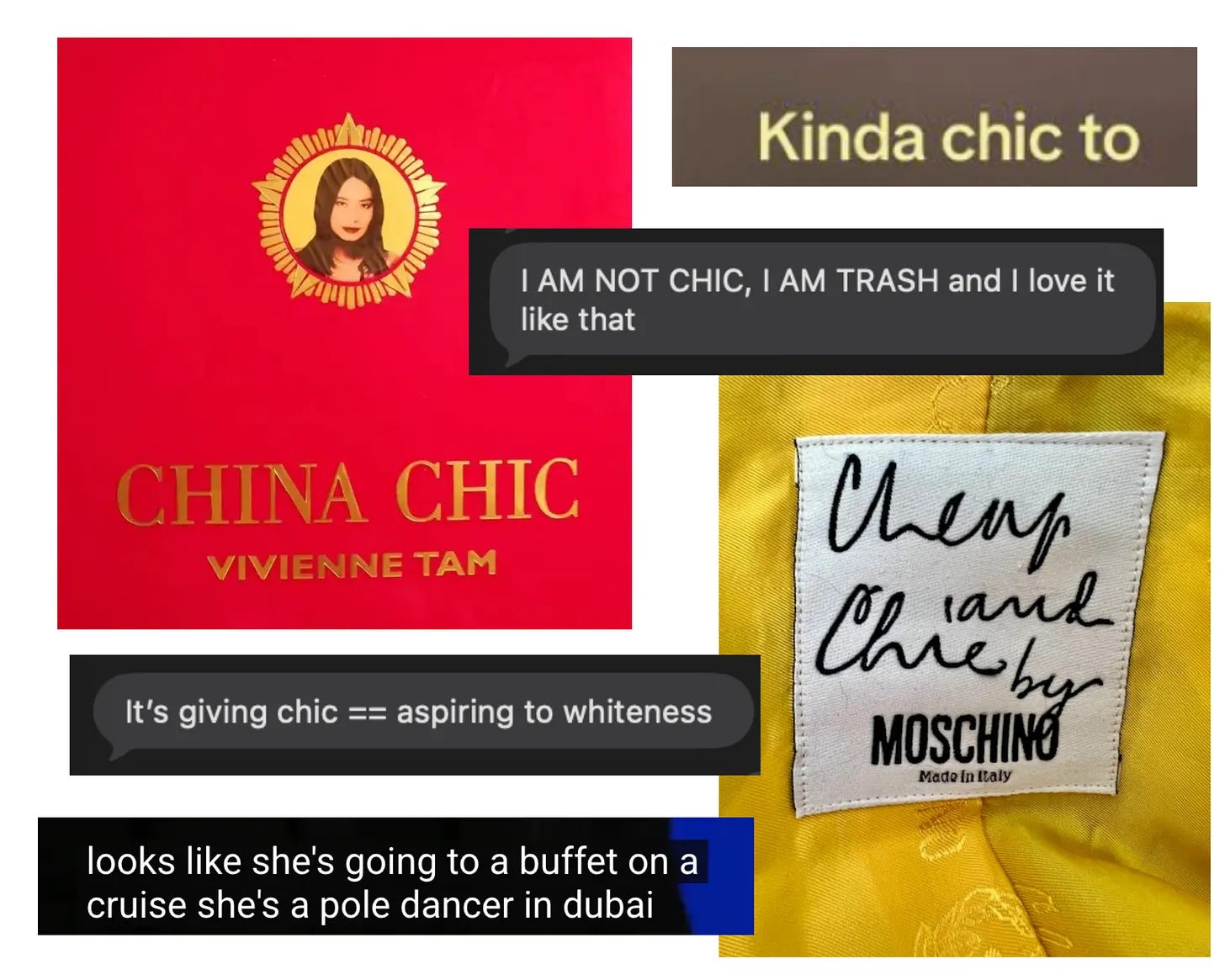
One of my fav sentences there: “It’s a word that, if I lean on too much, shrinks my ability to describe things using on my own imagination. It has a calcifying effect on my vocabulary.”
PROMPT: Next time you are writing or journaling, notice how often your brain leans on memes/online-speak (or generic words that are used and abused), and ask yourself, can I use a different word/phrase? If you can, then that’s great. But if you find yourself struggling, then maybe force yourself to think of different words to maintain your vocabulary elasticity. Now, clock that. 🤏🏼
IMP NOTE — the assignments above are more timeless, so do not put the pressure on yourself to have it figured out. Seven years in, and I still go back and forth and engage with these questions and thoughts.
🗂️ Writing Opportunities 🗂️
Rates: N/A
Westchester Publishing Services UK is looking to add skilled freelance professionals to their freelance talent pool to support a wide range of projects for publishers and content providers.
Application: Apply through this link
Rates: N/A
Location: 4-week residency in Bucheon, South Korea.
Dates: November 2026
Application Deadline: 28 August 2026
The Bucheon City of Literature office has launched the 2026 Bucheon Residency Programme, open to writers, poets, translators, and graphic storytellers who have at least one published work and are currently engaged in creative writing.
This programme aims to foster international exchange, enhance mobility for literary artists, and provide a unique environment to develop new work while connecting with Korean readers and the local community.
Application: To apply, complete and submit the application form (on page) alongside required documents and send to jsy97@korea.kr
JOB | THE NEW YORK TIMES - Researcher/Reporter for its Iran reporting team
Salary: Undisclosed
The New York Times seeks a Researcher/Reporter for its Iran reporting team. The position is a critical support role in the Times’ coverage on Iran. In the job, you will contribute to coverage of politics, culture, climate change, security, and international relations, among other topics, and you may be asked to help with breaking news, enterprise, investigations and innovative story forms.
This is a full-time, paid position. Based in London, UK.
Application: Apply through this link.
If you are an editor looking for pitches and would like to be listed here, please reach out, and I’ll add to next week’s issue.
🛎️ SluggDesk™ 🛎️

Hey there, anonymous reader,
Working full-time at a magazine is, I think, a pivotal experience for anyone who wants to be a cultural/fashion/art/tech/beauty writer or get real editorial experience. As much as I love freelancing, there are things I only learnt by being in-house.
It’s not the glamorous thing that TV makes out to be, but it’s also not The Devil Wears Prada. But it teaches you a lot about the industry, and just as much about yourself — professionally, and emotionally.
I can only speak to cultural and high-end magazines (the GQ and Vogues) and not newsrooms or political publications, as I have no experience in the latter. But in this world, a good two to three days are spent in team meetings, discussing the upcoming issue, syncing with the team, brainstorming, sharing progress, and keeping everything on track. Staying on top of things is non-negotiable because things can change. I’m not a fan of last-minute changes, but working full-time teaches you to adapt to them, especially when they are out of your control. At the end of the day, the deadlines don’t have much extreme flexibility, and so such an environment teaches you agility and how to work as part of a team.
You also end up building surprisingly emotional connections with coworkers — regardless of whether you’d be friends outside the office. Mainly because cultural writing can draw a lot on personal experience. Ideas in meetings often come from something someone lived through, even if they never write the piece themselves. That naturally invites vulnerability, which can be a good thing, but it can also invite emotional volatility. Because everyone’s name is attached to their work, you get attached to what you make — myself included. So you have to learn to ask yourself, is this genuinely disrupting my workflow, or am I thinking with my emotions first and only? Learning to tell the difference is part of succeeding in the industry.
It also teaches you how to work with people. Your job as a writer is with people. You could be having a bad/annoying/sad day, and you still have to show up to a meeting, or walk into an interview and create a safe space for the person across from you so you can get something real and profound out of them. That builds emotional and mental stamina.
Also, some weeks, it feels like a fun hangout where you toss around ideas, have a good laugh, and see a beautiful magazine come to life. Other weeks can be brutal. I tend to self-isolate when I need to write, as I get distracted easily and I talk too much. Lol. I love a good yap session.
Working full-time also helps you develop an editorial voice specific to an in-house publication, and it gives you real insight into how editors think. The institutional knowledge that accumulates will eventually benefit you throughout your entire career.
It also teaches you how to build your baseline skills and write in one consistent tone of voice. Once that baseline is solid, you can start stretching it and writing in different tones for different outlets or refining a personal voice you developed in-house and adapting it across the freelance work you take on later. It also gives you room for exploration, especially in your early years.
And for a short and final thought, you learn office politics. I hate it, but we all gotta do it at one point. You can’t avoid it your whole life because you’d rather not deal with it. There’s a time to pick your battles and a time to bite the bullet – and once you’ve actually learned what you needed to learn from a place, then it’s up to you whether you stay or go. But you should go through it. It teaches you how to advocate for yourself and builds real confidence. Because even as a freelancer sitting behind your computer in relative isolation, you can’t stay siloed forever. You still need the interpersonal skills that only come from being in a room with people, dealing with friction, and coming out the other side.
If you would like to see your questions in next week’s newsletter, please drop me an email at desk@sluggmail.com.
I look forward to your questions!